
App installieren
So wird die App in iOS installiert
Folge dem Video um zu sehen, wie unsere Website als Web-App auf dem Startbildschirm installiert werden kann.
Anmerkung: Diese Funktion ist in einigen Browsern möglicherweise nicht verfügbar.
Du verwendest einen veralteten Browser. Es ist möglich, dass diese oder andere Websites nicht korrekt angezeigt werden.
Du solltest ein Upgrade durchführen oder einen alternativen Browser verwenden.
Du solltest ein Upgrade durchführen oder einen alternativen Browser verwenden.
PC Oculus Rift - VR
- Ersteller pil
- Erstellt am
Benutzer, welche sich diesen Thread anschauen:
Gesamt: 1 (Mitglieder: 0, Gäste: 1)


kin ist morgen der daily deal im oculus store
https://www.reddit.com/r/oculus/comments/82fb0j/kin_up_for_24h_sale_tomorrow_march_7th_1200am_pst/
kaufen!
https://www.reddit.com/r/oculus/comments/82fb0j/kin_up_for_24h_sale_tomorrow_march_7th_1200am_pst/
kaufen!
Oculus Rift headsets are offline following a software error
There's no word on when a fix will be available.
engadget.com
There's no word on when a fix will be available.
Rebooting the Oculus software, or the PC it's running on doesn't seem to be working at the time. So, if you had plans to spend your day jacked into the matrix, it sounds like you'll need to readjust until a fix is available. We've reached out to Oculus for more information and will update this post should it arrive.
...
engadget.com

superschaf
Moderator
Hatte ich auch
Man muss nur das Datum zurücksetzen auf gestern oder früher dann läuft es wieder
Das Zertifikat ist abgelaufen
Man muss nur das Datum zurücksetzen auf gestern oder früher dann läuft es wieder
Das Zertifikat ist abgelaufen

Muss meine Rift auch endlich mal wieder anschließen, kam ich nach dem Umzug noch nicht zu.

Oculus Rift - Fehlendes Zertifikat legt alle VR-Headsets lahm
http://www.gamestar.de/artikel/ocul...fikat-legt-alle-vr-headsets-lahm,3327004.html

Mir egal - hab gerade mal KIN für 7,49€ gekauft
http://www.gamestar.de/artikel/ocul...fikat-legt-alle-vr-headsets-lahm,3327004.html
Mir egal - hab gerade mal KIN für 7,49€ gekauft
immer nich nicht gefixt? schon peinlich, "ey schef isch hab dir des cert zur Verlängerung hingelescht, unterschreib mal, net vergesse, ich bin dann mal im urlaub"
zum status https://mobile.twitter.com/oculus/status/971556153946669056
bin mal gespannt wie wir das update bekommen...
meine fresse, moderne soft ist die pest. in unserer firma sorgen die zertifikate auch für mehr stress als sie tatsächlich nützen.
zum status https://mobile.twitter.com/oculus/status/971556153946669056
bin mal gespannt wie wir das update bekommen...
meine fresse, moderne soft ist die pest. in unserer firma sorgen die zertifikate auch für mehr stress als sie tatsächlich nützen.
superschaf
Moderator
Gibt jetzt ein offizielles Tool um das Problem zu beheben:
https://support.oculus.com/217157135500529/
Alternativ kann man auch die Oculus Software deinstallieren und dann neuinstallieren
https://support.oculus.com/217157135500529/
Alternativ kann man auch die Oculus Software deinstallieren und dann neuinstallieren

Nate Mitchell hat auf Twitter angekündigt, dass Nutzer, die von dem Ausfall betroffen waren, "Store Credit", also eine Gutschrift für den Oculus Store bekommen sollen:
Mal abwarten, wie das gelöst wird - und was es als kleine Entschädigung gibt...
KIN wird es übrigens nächsten Montag erneut als Daily Deal geben, da aufgrund des Ausfalls der Deal an vielen vorbeigegangen sein dürfte.
Mal abwarten, wie das gelöst wird - und was es als kleine Entschädigung gibt...
KIN wird es übrigens nächsten Montag erneut als Daily Deal geben, da aufgrund des Ausfalls der Deal an vielen vorbeigegangen sein dürfte.
Hab meine Rift jetzt mal angeschlossen, Update installiert und es läuft. Schon lächerlich wie sich die Leute bei Facebook so künstlich aufregen  Fehler passieren halt überall und hier hat man doch schnell reagiert! Hauptsache direkt die Mistgabeln auspacken.
Fehler passieren halt überall und hier hat man doch schnell reagiert! Hauptsache direkt die Mistgabeln auspacken.
superschaf
Moderator
Naja das man seine Hardware einen ganzen Tag lang nicht benutzen kann weil da einer gepennt hat ist schon ziemlich nervig
Und nicht jeder scannt den ganzen Tag Foren oder reddit. Es wird genug Leute geben die heute und auch noch in den nächsten Tagen ratlos vorm PC sitzen und sich fragen warum es nicht mehr funktioniert. Sowas hätte einfach nicht passieren dürfen
Und nicht jeder scannt den ganzen Tag Foren oder reddit. Es wird genug Leute geben die heute und auch noch in den nächsten Tagen ratlos vorm PC sitzen und sich fragen warum es nicht mehr funktioniert. Sowas hätte einfach nicht passieren dürfen
immer nich nicht gefixt? schon peinlich, "ey schef isch hab dir des cert zur Verlängerung hingelescht, unterschreib mal, net vergesse, ich bin dann mal im urlaub"
zum status https://mobile.twitter.com/oculus/status/971556153946669056
bin mal gespannt wie wir das update bekommen...
meine fresse, moderne soft ist die pest. in unserer firma sorgen die zertifikate auch für mehr stress als sie tatsächlich nützen.
Jap! Ich finde dieser Ablaufdatums-Zwang für gültige/signierte Zertifikate gelinde gesagt auch scheixxe!. Was soll das bringen, außer dass man hier in ein weiteres Abhängigkeitsverhältnis hineingezwungen wird.
superschaf
Moderator
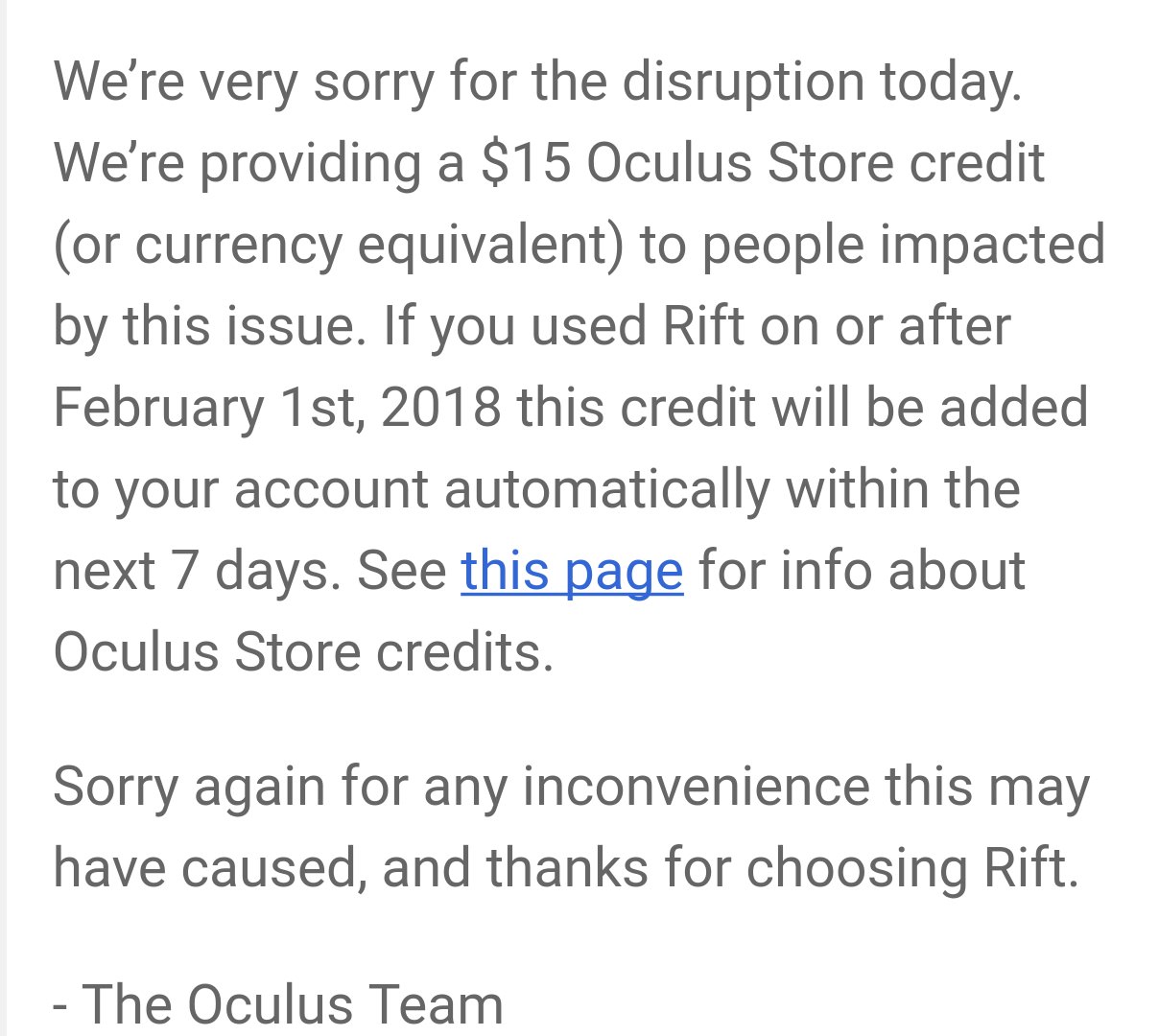
15 Dollar gibts für jeden der seine Rift seit dem 1. Februar benutzt hat
G
Gelöschte Mitglieder 185
Gast
Wollte gerade mal reinschauen, meine Oculus Software wurde einfach deinstalliert und war nicht mal mehr auf dem Rechner
Bei mir hat einfaches 'reparieren' durch den OculusPatchMarch2018.exe auch nichts gebracht. das HMD und die Home-app haben zwar wieder funktioniert aber der update-prozess der Desktop-App auf version 1.24 lief im Endlosloop und sämtliche Software konnte aus der App heraus nicht gestartet werden. Ende vom Lied, nach 4h rumprobieren habe ich die Desktop-App komplett deinstalliert - dann gings wieder. Kleiner Trost, zumindest musste ich die Games/Experiences nicht wieder neu runterladen. 
Zuletzt bearbeitet:
Jap! Ich finde dieser Ablaufdatums-Zwang für gültige/signierte Zertifikate gelinde gesagt auch scheixxe!. Was soll das bringen, außer dass man hier in ein weiteres Abhängigkeitsverhältnis hineingezwungen wird.
Sicherheit. Eine signierte .dll stellt sicher, dass die Datei vom Hersteller stammt und keine Manipulation erfolgte. Ist für die Ausführung von Programmen also durchaus sinnvoll.
Zum Thema "Store Credit": Inzwischen wird das Geschenk von Oculus verteilt. In Deutschland erhält man 13€, ich habe das GEld bereits erhalten. Es taucht in der Oculus-Software unter "Einstellungen" > "Zahlung" auf. Das Guthaben ist nach Gutschrift 1 Jahr lang gültig. Kann also entspannt beim nächsten Sale eingesetzt werden.
G
Gelöschte Mitglieder 185
Gast
Cool, hab auch Kohle bekommen, obwohl ich nur einmal irgendwann am 8ten mal kurz reingeschaut habe was es neues gibt.

BradSalter
The loot is a lie!
Mich bitte markieren, wenn Lone Echo im Angebot ist. Danke!
Sicherheit. Eine signierte .dll stellt sicher, dass die Datei vom Hersteller stammt und keine Manipulation erfolgte. Ist für die Ausführung von Programmen also durchaus sinnvoll.
Es ging mir ja nicht um die Signatur an sich sondern um das enthaltene Ablaufdatum - welches hier auch das Problem verursachte.
Mich bitte markieren, wenn Lone Echo im Angebot ist. Danke!
Dito, Bei Lone Echo warte ich auch auf den nächsten Sale.
Nun, wenn ich einen Passcode an einem Türschloss nie ändere, erhöht sich maximal die Gefahr, dass jemand den Code herausfindet und entsprechend eingeben kann. Wenn ich allerdings alle zwei Wochen meinen Code ändere (und der alte entsprechend abläuft), besteht dieses Problem nicht. Das Problem war hier einfach nur, dass die bei Oculus geschlafen haben und vergessen haben, die Datei neu zu signieren, bevor die Signatur abläuft und eine neue benötigt wird.Es ging mir ja nicht um die Signatur an sich sondern um das enthaltene Ablaufdatum - welches hier auch das Problem verursachte.
Gute Zusammenfassung (in englischer Sprache):
What is a code signing certificate, and why is it used?
Imagine you write a program that is in multiple parts (how most work), and you use an external library to access the network. It is stored as a separate file, and gets linked into your program when needed (this is called a "dynamic link library," or DLL).
Now, imagine a hacker wants to steal data. All they need to do is replace your network library with theirs, except theirs sends a copy of your passwords and billing info to their command and control website before passing it on to you. Neither you nor customers would ever know. That's bad - and that used to happen.
In response, Microsoft created a policy that requires code libraries to be "signed" by the vendor. When you call your library, it checks to see whether it's the same version that was signed - was any code changed or injected? Can it really be trusted? If the signature is valid, the answer is probably "yes."
Why does it expire?
Great, but what if someone could forge a signature, or steal the "stamp" used to create it? The whole thing breaks down. (I'm simplifying the whole cryptographic element here).
So, the "certificate", or signature (again, simplifying here) expires after a period of time, forcing it to be updated. It can also be revoked by a central authority in case of a breach. Some vendors choose the longest life possible to minimize outages. Others choose shorter lives to maximize security. What's best is a matter of some debate.
Ähnliche Themen


- Antworten
- 69
- Aufrufe
- 15K

- Antworten
- 2
- Aufrufe
- 813
- Antworten
- 37
- Aufrufe
- 3K

- Antworten
- 3
- Aufrufe
- 749
