
App installieren
So wird die App in iOS installiert
Folge dem Video um zu sehen, wie unsere Website als Web-App auf dem Startbildschirm installiert werden kann.
Anmerkung: Diese Funktion ist in einigen Browsern möglicherweise nicht verfügbar.
Du verwendest einen veralteten Browser. Es ist möglich, dass diese oder andere Websites nicht korrekt angezeigt werden.
Du solltest ein Upgrade durchführen oder einen alternativen Browser verwenden.
Du solltest ein Upgrade durchführen oder einen alternativen Browser verwenden.
MULTI Sekiro: Shadows Die Twice
- Ersteller .hack//Haseo
- Erstellt am
-
- Schlagworte
- activision from software pc ps4 sekiro xbox one
Benutzer, welche sich diesen Thread anschauen:
Gesamt: 1 (Mitglieder: 0, Gäste: 1)

G
Gelöschte Mitglieder 617
Gast
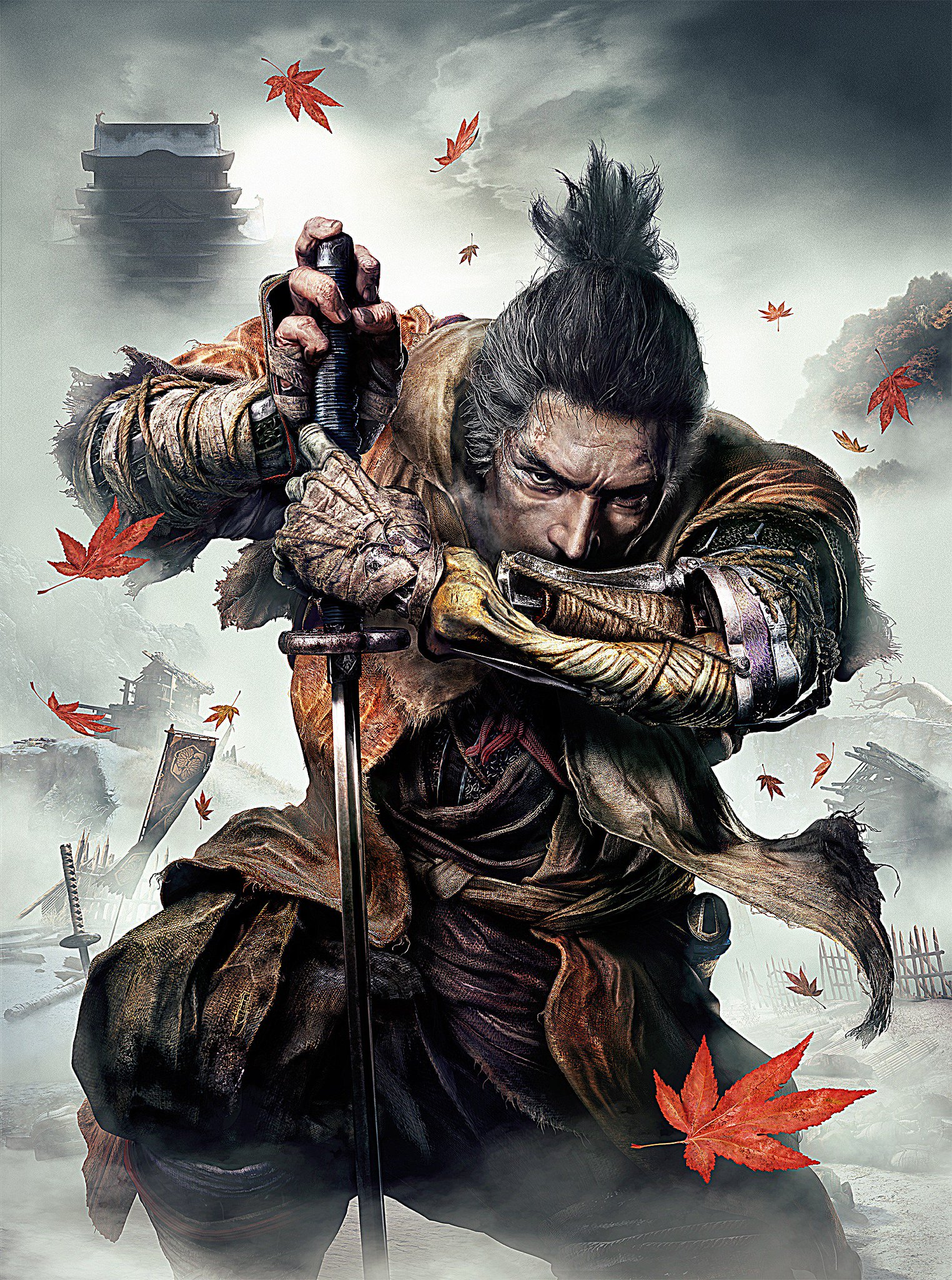
G
Gelöschte Mitglieder 213
Gast
aber mit irgend einem scheiß schärfe filter. 

Jemand eine Idee, wo man die CE noch bestellen kann? Bei Amazon ist sie leider ausverkauft.

Jemand eine Idee, wo man die CE noch bestellen kann? Bei Amazon ist sie leider ausverkauft.
Bei gamestop.de kannst du sie im Moment noch für 119,99€ Vorbestellen.
G
Gelöschte Mitglieder 213
Gast
am 14. oktober findet übrigens in osaka ein extra event seitens from software statt.
https://www.fromsoftware.jp/jp/event2018/
sekiro, deracine, metal wolf chaos und dem switch port von dark souls werden vertreten sein.
denke neues material wäre nicht überraschend.
https://www.fromsoftware.jp/jp/event2018/
sekiro, deracine, metal wolf chaos und dem switch port von dark souls werden vertreten sein.
denke neues material wäre nicht überraschend.
G
Gelöschte Mitglieder 213
Gast
Polygon: Dark Souls’ creator on what sets Sekiro: Shadows Die Twice apart
https://www.polygon.com/2018/10/2/1...ie-twice-tgs-2018-hidetaka-miyazaki-interview
https://www.polygon.com/2018/10/2/1...ie-twice-tgs-2018-hidetaka-miyazaki-interview
“At the same time,” Miyazaki said through a translator, “we were very keen to show people what we could do with Sekiro. We believed people would enjoy what we could do without the limitations from our previous games. And you know, we’re seeing that at these shows. We’re seeing people having fun and giving us their feedback. That is a relief.”
“We’re not intentionally trying to create Sekiro as an antithesis to the Souls games,” Miyazaki said, “or turn the whole company direction of making games on its head, or trying to pull the rug out from under people. We love the Souls games ... I loved creating those games. Sekiro is just going to be something fresh and different, but it’s going to have things that are familiar to player of these old games. I want to keep that intact because I enjoy the aspect of those old games, but new components and mechanics is a way to keep it fresh. And keeping it fresh — providing something new — is what’s going to lead to a better game.”
“The right-hand katana is fixed, that will be your primary weapon for the whole game,” Miyazaki said. “That will allows us to [deeply explore] what it means to master that katana as your single main weapon. We obviously lose the customization and some breadth, so in the left hand, we’re compensating for that. Having various prosthetic tools, having these be upgradable and having this element of user choice and freedom, how they want to strategize and use these two weapons in conjunction.
“There’s also what we’re calling the shinobi deathblow, which is a kind of instant fatal attack. There is a way to activate a deathblow technique which is sort of like a devastating special skill that you’ll be able to acquire and choose throughout the game. These are going to provide extra options for how you want to change up the battles as you’re playing.”
“We’re preparing a number of ways for the player to feel like they’re able to [use] everything in their arsenal in order to take on these situations,” Miyazaki said. “With stealth elements, it’ll allow you to sneak undetected, to an extent. While you’re undetected, you can eavesdrop on enemies to get hints about other enemy weaknesses, strategic hints about how to approach the map and certain situations, or [learn] story details as well. This is a kind of a new element ... and it relates nicely to be the theme of the shinobi.”
Some familiar Miyazaki and FromSoftware gameplay traditions will return, like a new game plus mode. “This is still taking shape,” Miyazaki explained, adding that the mechanic will be similar to previous titles and will tie into Sekiro’s story. Some traditions won’t, like a cameo from recurring Souls series ne’er-do-well Patches. “Nothing is final just yet,” Miyazaki said, “but we don’t believe he’s going to be in this game.”
“There’s still going to be this kind of fragmented element to it,” Miyazaki said. “You’re still going to have to explore it to a find all the clues and depth for yourself. We feel like it’s not going to change too much in that sense. Our approach to storytelling has not changed.
“This time we do have the fixed protagonist. We feel like he creates the axes for the main core of the story. The characters, they revolve around him as well. This allows us to frame the story and the settings in a much simpler light than previously. So it’s going to be initially easier to understand and easier to relate to.”
G
Gelöschte Mitglieder 213
Gast
sekiro ist das titelthema der nächsten gameinformer ausgabe inklusive coverage hub für die nächsten wochen.
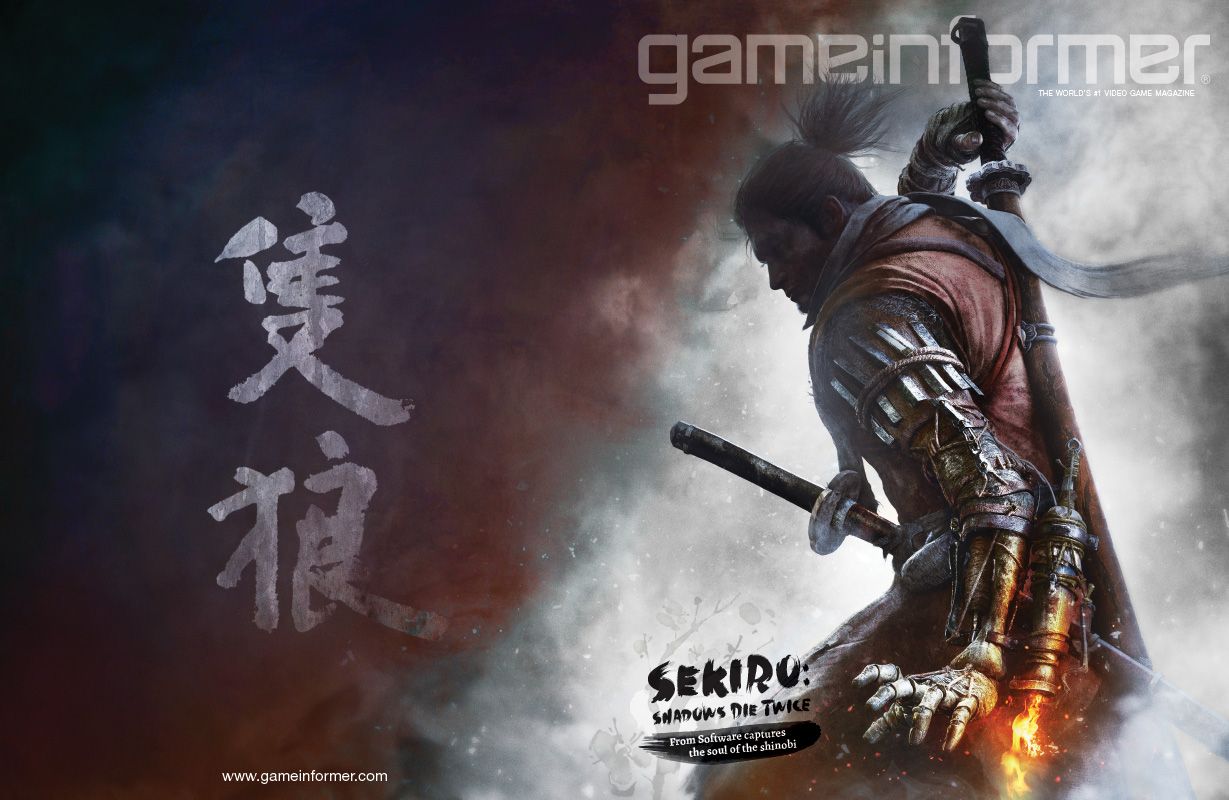 https://www.gameinformer.com/cover-...ruary-cover-revealed-sekiro-shadows-die-twice
From Software has been around forever, but is best known for its suite of action RPG games beginning with Demon's Souls. Between Dark Souls titles and Bloodborne, From has explored atmospheric dark fantasy and cosmic horror, and now they head to feudal Japan for Sekiro: Shadows Die Twice. We spent over two hours with the game in Tokyo and picked From Software president Hidetaka Miyazaki's mind to get all the details on the upcoming game, from progression systems to traversal. Check out the cover for the February issue of Game Informer!
Zuletzt bearbeitet von einem Moderator:

 .
.
G
Gelöschte Mitglieder 213
Gast
und schon haben wir die ersten neuen infos aus der gameinformer ausgabe.
es gibt keinen online modus und man wird das spiel pausieren können:
https://www.gameinformer.com/2019/01/07/why-sekiro-shadows-die-twice-doesnt-have-online-multiplayer
über das character progression system im spiel (+ video im link):
https://www.gameinformer.com/exclus...progression-works-in-sekiro-shadows-die-twice
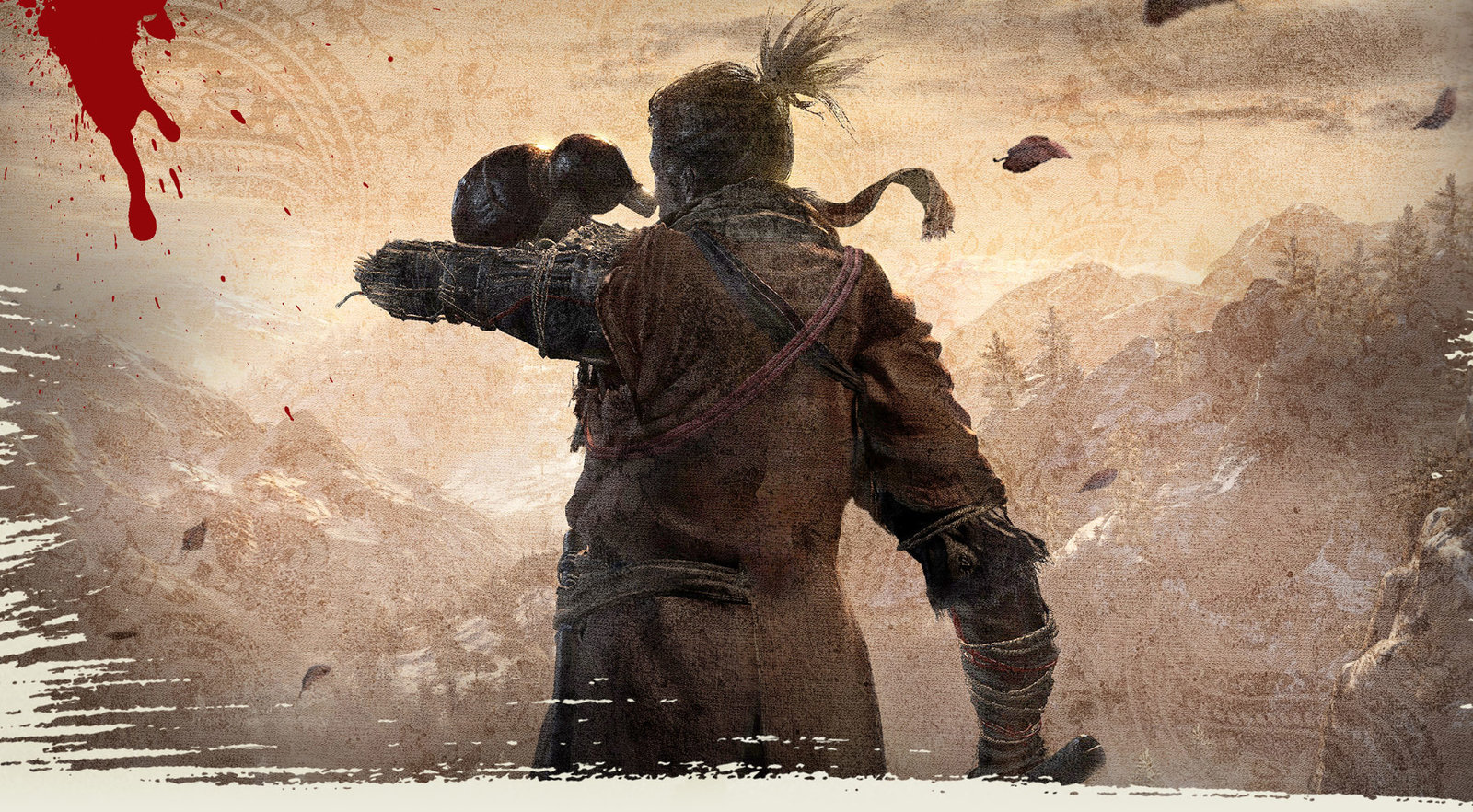
es gibt keinen online modus und man wird das spiel pausieren können:
https://www.gameinformer.com/2019/01/07/why-sekiro-shadows-die-twice-doesnt-have-online-multiplayer
After the initial reveal of Sekiro: Shadows Die Twice, we quickly learned it would lack online multiplayer – a first for the developer’s major titles since Demon’s Souls. As part of our visit to the studio for our cover story, we asked them to elaborate on why that was the case.
Past From games have had an idiosyncratic take on online multiplayer. Players could leave each other notes throughout the world, warning each other of dangerous surprises or goading them into hazards. One player could summon another to help them with a difficult section, but risk being invaded and attacked by another.
From Software isn’t necessarily abandoning that part of its legacy, but it is taking a bit of a detour for now. “Of course, we at From, we love those online elements,” says Yasuhiro Kitao, manager of marketing and communications at From. “We love to create our own characters just as much as everyone else. We hope players are looking forward to something in the future where we might go back to that, but for now, Sekiro is very much its own thing.”
Not having an online component has its upsides, however. For one, players who’ve longed for an honest-to-goodness pause button (who first got a taste with the Switch version of Dark Souls) finally have that option. It also means players don’t have to worry about being invaded during tense encounters. And without co-op, bosses can be designed with a single player in mind.
Finally, it frees From up to let loose their creativity when creating Sekiro’s map. “When creating these playspaces, we don’t have to take into consideration how players will operate with one another in these maps, or how they may exploit the playspace by cooperating or something like this,” Kitao says. “So it allows us, again, to hone in on the player experience, and really capitalize on that lack of restriction that comes with creating a multiplayer-based game, and let our imagination run wild in these places.”
über das character progression system im spiel (+ video im link):
https://www.gameinformer.com/exclus...progression-works-in-sekiro-shadows-die-twice
One of the ways Sekiro: Shadows Die Twice marks a departure for From Software is in how your character becomes stronger. In other From games, you tailor your character by pouring points into different stats like strength, dexterity, and intelligence, depending on whether you want to fight as a brute, archer, or wizard, respectively. Shadows Die Twice won’t have that breadth of customization, as your character, The Wolf, is a shinobi through and through. That doesn’t mean you can’t tailor him to fit your playstyle, though.
A major departure hardcore From fans may scoff at is the lack of corpse runs. Though you gain experience from defeating foes in Shadows Die Twice, that experience is now divorced from currency; gold now drops from enemies as well, and you won’t lose either when you die. If you’re afraid that change might upset the balance of tension and accomplishment that have come define From games, there’s hope: Director Hidetaka Miyazaki says death will have a detrimental effect, but wasn’t willing to tell us what that might be.
Instead, progression in Shadows Die Twice is slow but steady, as the experience points you gain from killing enemies fill a bar that eventually provides you with a skill point that, you guessed it, you can spend in a skill tree. But it wouldn’t be a From game if there wasn’t a catch: Before you can invest in a skill tree, you have to unlock it by finding a particular item as you explore the world.
Once you’ve unlocked a skill tree, you can invest skill points at Sculptor’s Idols (Shadows Die Twice’s take on bonfires). From showed us a few skill trees for The Wolf; one based on shinobi arts, one around samurai arts, and another based on building up the prosthetic arm. Along with passive buffs and improvements to your basic moveset, you can also unlock special moves called combat arts, activated by pressing both front shoulder buttons and which must be equipped separately. These moves are meant to be periodic rewards that let you invest in a particular playstyle “just to give you something to make you feel like you’re roleplaying in a certain way,” says Yasuhiro Kitao, manager of marketing and communications at From Software.
Each of these trees is catered to a different playstyle. The samurai skill tree, for example, resembles the common warrior archetype, which relies on overt, grounded aggression. The shinobi tree is more evasive and lets you control crowds, with skills like a spinning slice attack that deals damage in an area and the ability to step over enemy spears. Finally, the prosthetic tree offers multiple more ways to approach different encounters, with the option to upgrade your shuriken throw with a follow-up attack that closes the distance between you and your opponent, or to let you throw multiple shuriken.
What we saw of these trees was fairly simple, though they weren’t final. We saw about three or four pathways to take our skill tree, with the final tier of skills requiring four skill points. How long these skill points will take to earn is still up in the air, however. The goal is to allow you to be “more creative and find your preferred ninja style, so you’ll have to specialize and think [about] which path you want to take,” Kitao says.
While the skill tree lets you build out The Wolf in various ways, upgrading his other stats will require more attentive eyes. As you venture through Shadows Die Twice, slay enemies and bosses, and find hidden rooms, be on the lookout for prayer beads, four of which will increase your overall health and posture (The Legend of Zelda’s heart pieces come to mind). You might also find tools to upgrade your prosthetic arm with new abilities, such as a shuriken launcher, an axe, or a flame vent, granting you access to new abilities to take with you on the battlefield. There might even be ways to build on the resurrection mechanic, From tells us.
All of these options make for one well-equipped character instead of several kinds of specialized warriors. From says this style of progression, which streamlines options at the cost of variety compared to Dark Souls and even Bloodborne, lets them focus on offering more overall depth to individual encounters, as From can more easily tailor encounters around your character’s skillset. “This is actually using Miyazaki-san’s own words – You could think of the previous Souls games as more expanding laterally, and adding breadth to these various options and builds,” Kitao says. “While you are a fixed shinobi protagonist, you do feel like there’s a sense of progression, there’s a sense of building your own character and finding your own playstyle, and experimenting with this throughout the game.”
Muss man sehen, aber Activision war bei den Nischentiteln immer sehr fair. Crash und Spyro sind wahrscheinlich die aufwendigsten Remakes zu einem extrem fairen Preis, die Platinum-Games hatten auch keine Microtransactions oder Lootboxen und waren sehr günstig und Indies wurden auch immer absolut vernünftig gepublished. Kann hier natürlich anders sein, weil Sekiro sicherlich ein relativ hohes Budget hat, aber ich bin mal ausnahmsweise optimistisch.
G
Gelöschte Mitglieder 617
Gast
YT-Version:
G
Gelöschte Mitglieder 213
Gast
über das hub areal (aka sekiro's firelink shrine) des spiels:
https://www.gameinformer.com/2019/01/09/heres-what-you-can-do-in-sekiros-hub-area
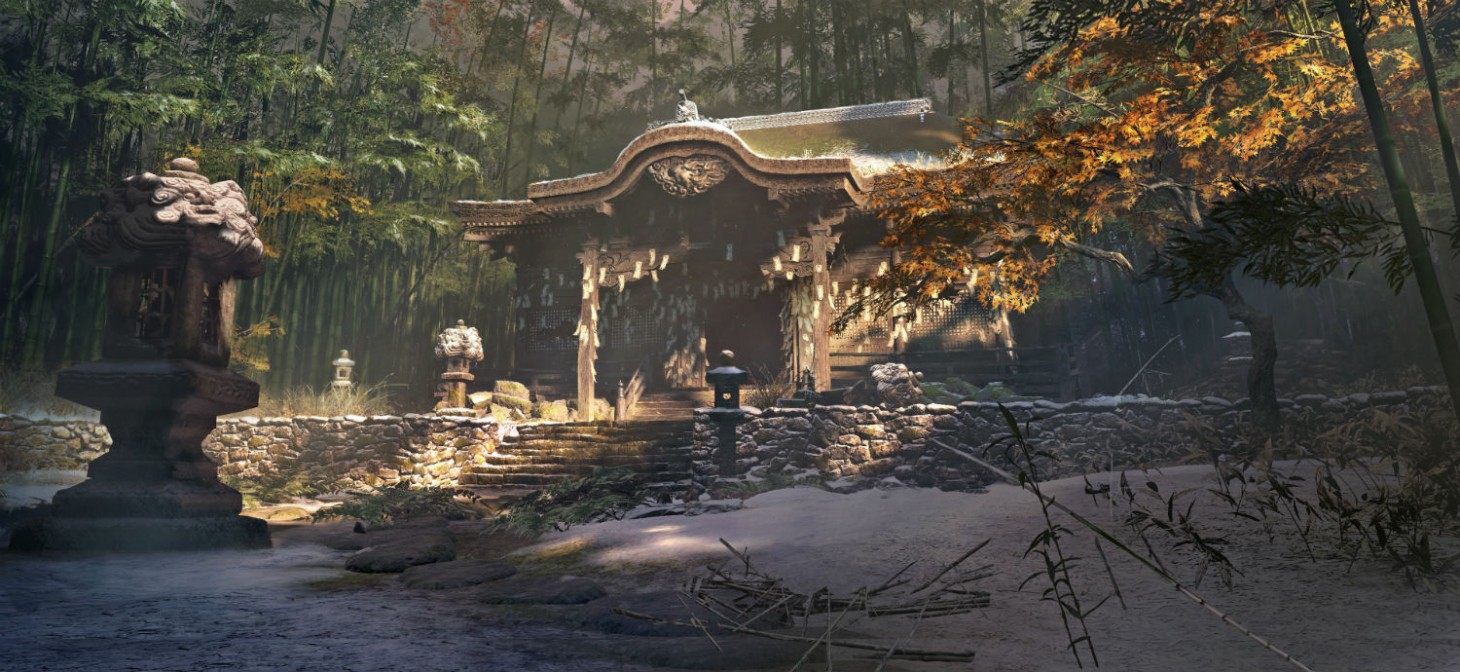
https://www.gameinformer.com/2019/01/09/heres-what-you-can-do-in-sekiros-hub-area
Although From Software is rethinking major aspects of its established action-RPG formula with Sekiro: Shadows Die Twice, it’s sticking to a few tried-and-true approaches when it comes to the game’s overall structure by including a hub area that gives players a few things to do when they’re not slaying monsters out in the world.
If you’re familiar with From’s previous output, Sekiro’s Dilapidated Temple should feel familiar. While you won’t have access to it from the start of the game, you’ll quickly gain access to it after a certain point in the story. After that, you can access the Dilapidated Temple from any of the sculptor’s idols (which act as Sekiro’s take on bonfires). You can also use limited-stock items to immediately teleport yourself to the temple from anywhere in the world (similar to how Dark Souls’ Homeward Bone item works).
At the Temple you can talk to and offer items to The Sculptor, who helps out with character progression. Next, you can talk to a character named Emma to use your Gourd Seeds, which increase the amount of uses your Healing Gourd offers when you replenish them at Sculptor’s Idols.
You can also talk to a character named The Immortal Soldier. The Immortal Soldier acts as a training dummy who can teach you how to put all of the items, moves, and combat arts you learn throughout the game to use by, well, beating him up. He’s got a few tips for you, too, such as how to avoid enemy attacks, how the parry system works, and how to deal with thrusting attacks. Don’t worry about going on easy on him, of course – he can’t die, and he frankly doesn’t sound too happy about it.
That’s just the start, however. “If you’re familiar with the Souls games, you know how you can find NPCs in the world,” says Yasuhiro Kitao, manager of marketing and communications at From. “Maybe they’re vendors, maybe they do something with you, maybe they head back to the hub, where you can speak to them and progress their quests.” This is the case in Shadows Die Twice, as well.
You can access different areas directly from the Dilapidated Temple, though it’s not quite as expansive as the hubs from previous From games. “It doesn’t branch out in every direction right from the start,” Kitao says. “That said, it’s not a kind of linear progression from A to B to C. You do have points with branching paths, with forks in the road.”
How many forks there are along these particular roads is still up in the air, but director Hidetaka Miyazaki says it’ll be among From’s most open areas. “We feel like Sekiro’s probably on the higher end of the spectrum in terms of the freedom the player has to explore the world if we’re to compare it to our previous games,” he says. “Particularly from the mid-game onward, the world really opens up, and you have a great deal of choice and freedom about which order and way you choose to explore.”
G
Gelöschte Mitglieder 617
Gast
Exclusive Gameplay From Sekiro: Shadows Die Twice's Hirata Estates
Video im Link:
https://www.gameinformer.com/video-...from-sekiro-shadows-die-twices-hirata-estates
With Game Informer's new cover story on From Software's Sekiro: Shadows Die Twice, we're diving in deep and sharing everything we learned about Hidetaka Miyazaki's next game. During our trip to the studio, we played the game for several areas and explored a new area called Hirata Estates. The area is technically a flashback, taking place three years before the events of the main game and helps to explain Sekiro's relationship with a character known as the "young lord". Watch the video above to see new gameplay from Hirata Estates as Game Informer's Dan Tack and Suriel Vazquez explain what stood out to them.
Video im Link:
https://www.gameinformer.com/video-...from-sekiro-shadows-die-twices-hirata-estates
G
Gelöschte Mitglieder 213
Gast
gameplay schau ich mir nicht mehr an, aber das sekiro dieses wahnsinnsquartal beendet, ist nur passend. das beste kommt eben zum schluss.
ace combat 7, resident evil 2, metro exodus, devil may cry 5, sekiro, alles goty und sogar gotg anwärter.
2017 all over again. danke japan (+ ukraine).
ace combat 7, resident evil 2, metro exodus, devil may cry 5, sekiro, alles goty und sogar gotg anwärter.
2017 all over again. danke japan (+ ukraine).
Ähnliche Themen
G
- Gelöschte Mitglieder 213
- Rollenspiele & Adventures
-
Gelöschte Mitglieder 213
- Antworten
- 0
- Aufrufe
- 448
G

- Antworten
- 2
- Aufrufe
- 626
G
- Antworten
- 1
- Aufrufe
- 492
G

- Antworten
- 376
- Aufrufe
- 33K
